Day 1: am: Professional development
- Oct 13, 2015
- 2 min read
I thought that a really good way of clarifying what this day was about and processing the information would be to reiterate it here. We were visited by Grant Lichtman, a gentleman that has many labels around education, including 'change agent'. He came to see us; to experience our school and understand & question our approach to education.
He presented us a synopsis of four books. He asked us to reflect on our practice in relation to the themes within each book.
How do we see each one in our school?
How can it be improved, grown or emphasised?

What makes a Design Executive Officer?:
-Change agents
-GSD: Get “Stuff” Done
-Socially Intelligent
-Intuitive
-Systems Thinkers
-Risk Takers
Our group focused on social intelligence.
We decided that a good analogy of this was an electrical circuit with a light bulb. The light would not work without the human connections. Other components are the battery.
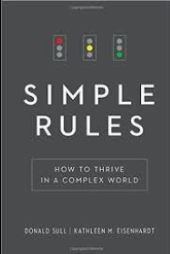
"Strategy lives in the simple rules that guide an organization’s most important activities."
"A strategy that doesn’t influence critical decisions on a day-to-day basis, however, is not a strategy—it is a book report."
We believe that intuition, voice and data are necessary in making rules.
In groups we discussed these things:
-Prioritizing rules: rank options to decide which alternatives will receive limited resources
-Stopping rules: dictate when to reverse a decision.
-How-to rules: getting stuff done
-Coordination rules: between multiple parties

This book introduced us to the idea of the 'Brain Trust', which is a collective that come together to build the ideas for the movies.
In groups we answered these questions:
What are some simple rules for building a Brain Trust process at HPSS?
How might we use Brain Trust time with students?
We talked about 'World Cafe' time for students and teachers, where we could grow ideas as a collective.
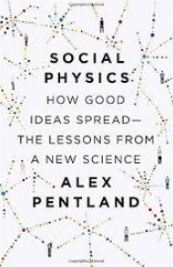
This one was particularly intellectually heavy for me.
This book "describes connections between information and idea flow on the one hand, and people’s behavior on the other.
Helps predict productivity of groups and how to “tune” communication networks."
“The process of oscillation between exploration and engagement appears to increase creative output by building up a more diverse store of experiences that can be drawn on as examples.”




Comments